Milk Thistle-Thistle Family
|
Silybum
marianum |
|
blessed milk-thistle, spotted thistle,
variegated thistle |
Characteristics. This common annual or biannual broadleaf
is distributed widely in the western US.
Although considered toxic to livestock, the bigger concern is
establishment in rangeland or pastures with dense stands displacing native or
beneficial forage species. Dense, established milk thistle stands in
Identifying
Characteristics.
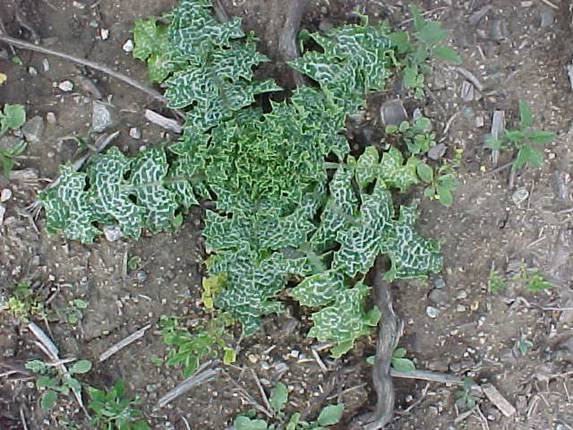
The first true leaves are spiny
and mottled white around the veins. Mature plants are stiff, 2 to 6 feet tall,
and sparsely branched. Lower leaves are up to 2 feet long, with leaf size
diminishing towards the top of the plant. Leaves are spiny and deeply lobed
with leaf bases that wrap around the stem. A distinguishing characteristic of
milk thistle is the white patches, or marbling found along the veins of the
dark green leaves veins. This
distinguishes this from other thistles such as Italian, bull and Canadian.
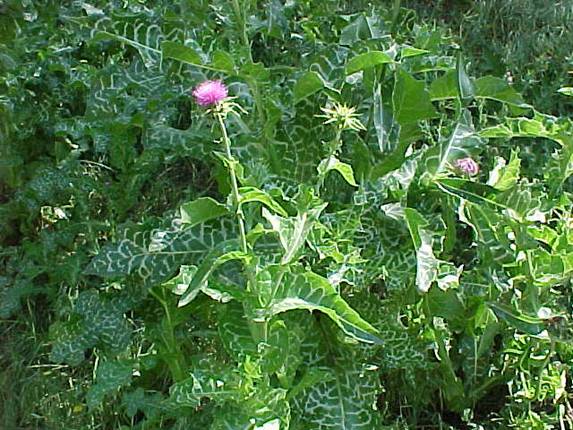
Flowers are
nearly spherical, reddish purple to purple, and shiny with typically one flower
per stem. Flower bracts sport spines up to 2 inches long.
Milk thistle has been used for almost two thousand
years especially in treating different liver diseases and conditions (liver
inflammation, cirrhosis and liver damage or
gallbladder infections). It cal also benefit in decreasing cholesterol levels and reducing possibilities for growth
of cancer cells.
Milk thistle side effects are minor and not very common, but
knowing them can help in some situations. Consuming milk thistle in great amounts can lead to minimal
to severe headaches. This supplement can
also cause mild laxative effect. Right after that, problems with gases may
occur, upset stomach and bloating, too. You might also feel weak in general.
Some patients have reported insomnia
which can also lead to weakness, tiredness and fatigue.
(We all know that insomnia affects the immune system as
well). There were even few cases of impotency and
sexual drive changes. Other side
effects of milk thistle usage could be skin issues like
rashes, problems related to heart, loss of appetite etc. All of these milk thistle side effects are usually mild and not too serious.
However there can be rather annoying side
effects like itching, lip
swelling; swollen throat, tongue or even the whole face.
Breathing problems have been reported as
well. Using anything in larger doses than prescribed is harmful. The same is
with milk thistle. Do not consume
it in larger amount than your body needs. There is a risk of an overdose and
you might have problems. Do not forget to consult your doctor before you start
using milk thistle.
Important Characteristics
to Control. Annual thistles are most susceptible to
chemical control in the fall. Biennial thistles are most susceptible to control
in the early spring, in the rosette stage. For specific chemical control
recommendations, refer to the
\
\