Buttercup
Oxalis-Woodsorrel Family
Oxalis
pes-caprae
Bermuda
buttercup, sour grass
Characterisitics. This weed is sometimes grown as an
ornamental but has escaped and become a frequent pest of turf, gardens and
other ornamental situations. It is quite
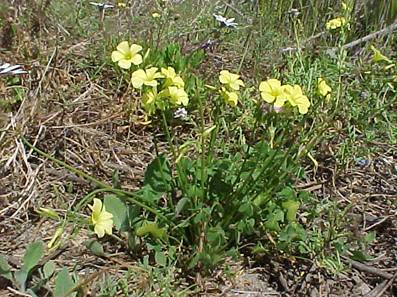
similar to woodsorrel but often grows more upright, has much more showy flowers
and reproduces primarily by small bulbs. The leaves and stem contain oxalic acid
which gives then a sharp sour taste.
This plant is sometimes eaten by humans which is perfectly acceptable in
small quantities. However consumption of
large quantities of this plant (oxalic acid) can bind the body’s calcium supply
and result in nutritional deficiencies.
Identifying Characteristics. This weed
typically grows in upright clumps. Seedlings
are not generally encountered in
The compound
leaves are a typical three-leaf clover shape, each consisting
of three heart
shaped leaflets.

The showy yellow flowers occur singly or in clusters each at the end of a
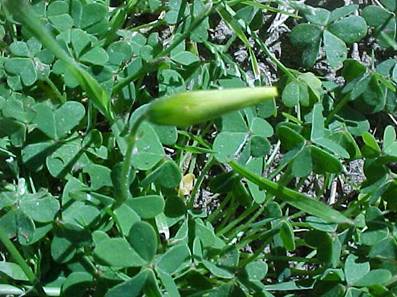
slender elongated stem and have 5 yellow petals. Unopened flowers have a
characteristic
elongated
cone-shape.
Characteristics Important to Control. This is a weed that is very
difficult to remove. You must dig out all the little bulblets, or it will keep
coming back. Some people use them in mass plantings in front of their houses,
where they do have large yellow flowers on tall stakes.
It grows from clusters of
little bulblets and spreads itself by making new bulbs & by reseeding.
Getting all the bulbs out is impossible-too small, too profuse- but you are
reducing the population by digging out some of them. Like all bulbs (think of
daffodils), the bulbs are fed by the foliage, so even just chopping the tops
off as soon as they appear helps to exhaust the roots. Not all the bulbs will
sprout at the same time, so this must be a continuous project all season. Don't
let it go to flower, attack it ASAP!
Alternatively, you can use
Roundup on the foliage, which is carried to the bulblets and kills them. Any
herbicide rightly makes some people nervous, but Roundup is generally
considered safe by knowledgeable professionals (it has a very low toxicity to
people and animals in the first place, breaks down on contact with the soil
into non-toxic compounds, & has been around a long time). On general
principal, I only use it on a couple of types of weeds, Bermuda buttercup among
them (also Bermudagrass). You need to continue to spray it on the foliage as
new plants appear.